
Mulch or Bare Soil? A Practical Guide to Garden Beds in Fourways

FOURWAYS RESIDENTIAL GARDENS · CARE STARTS BELOW THE LEAVES
Your lawn may be neatly cut and your shrubs well shaped, yet the beds between them still look unfinished. Exposed soil dries at the surface, weeds return and every watering seems to leave a different patch looking damp. Is mulch the answer, or would it simply hide a problem?Mulch is a covering placed over the soil. Used appropriately, it can help conserve moisture, suppress some weeds and give a bed a more settled appearance. It is not a substitute for suitable planting, drainage or a realistic care routine.
For Fourways homeowners, the useful starting point is the condition of the bed rather than the colour of the material. This guide helps you prepare a conversation about Hilltop’s residential garden services without assuming that one product suits every part of your property.
Before ordering mulch
Look at drainage, existing weeds, plant positions and irrigation coverage. Decide what you want to improve, then ask which material and preparation are appropriate. Covering a bed should be the final step in a considered plan.
What mulch can change, and what it cannot
Think of mulch as a layer that changes the soil surface. The RHS guide to mulches and mulching explains its role in retaining moisture and reducing weed growth. That makes it useful to discuss when exposed beds need repeated attention.
The result depends on the material, how it is applied and the conditions below it. A bed with established perennial weeds still needs preparation. A position that collects water still needs assessment. A plant already crowded against a wall will not gain growing space because its surroundings look tidier.
Set a practical aim: easier observation and upkeep, a consistent finish or less exposed soil. Avoid expecting a decorative treatment to resolve every plant-health concern at once.
Start by reading the bed
Walk around the area before a routine garden visit. Note places that stay wet, areas that dry differently and patches where weeds repeatedly return. Observe the bed after normal watering or rain if possible, without assuming one observation tells the whole story.
Look at the plants as well. Are stems buried by old material? Can you see where individual plants begin? Is there room for future growth and access for maintenance? Photograph the whole bed, then add close views of concerns.
If plants are visibly declining or water remains pooled, explain that first. Ask for the underlying conditions to be assessed before committing to a new covering. A clearer brief often starts with a problem description rather than a shopping list.
Organic mulch or a mineral finish?
Organic materials
Bark-based and other suitable organic materials can create a softer garden finish. They change as they break down, so they need observation and eventual replenishment. Ask what the proposed material contains, how it will be sourced and why it suits the planting.
Do not assume every load of shredded garden material is ready for every bed. Its condition and suitability matter. If you have pets, young children or particular sensitivities, mention those when discussing material choice.
Gravel and other mineral coverings
A mineral surface can be part of a deliberate design, but its maintenance is different. Leaves and soil may collect between pieces, and changing the planting later can become more involved. Consider how the material will be contained at the edge of a lawn or path.
Ask how the finish relates to the plants and the site. A photograph of a gravel garden is useful inspiration; it does not show how your own bed drains, how hot the position becomes or what is underneath.
Preparation makes the difference
Discuss weed removal before material arrives. Ask how existing growth will be dealt with, what will be removed and which plants must remain untouched. Mark any small or dormant plants that could otherwise be mistaken for unwanted growth.
Keep preparation and application visible in the quotation. A price for supplying material may not include clearing, transport, spreading, edging repairs or waste removal. Confirm each item rather than assuming “mulch the beds” means the same thing to everyone.
Ask for advice on a suitable layer for the chosen material and planting. More is not automatically better. Keep material away from plant stems and trunks as appropriate, and avoid burying crowns or raising levels against structures.
Keep irrigation visible and accessible
Before work starts, identify sprinkler heads, drip lines and any components that need routine access. Photograph their positions. Material should not block a sprinkler’s movement or hide an issue that someone needs to find later.After the bed is finished, observe a normal watering cycle. Does water still reach the intended area? Are any parts missed or unusually wet? A changed surface does not automatically justify running the system for longer.
If coverage already seems uneven, discuss irrigation assessment and repairs alongside the bed work. The existing guide to dry patches and wet spots explains useful observations to record first.
Decide how the edges will work
A good finish needs a clear boundary. Look at where the bed meets the lawn, paving and entrances. Discuss how material will be kept within the bed and how the edge will be maintained during ordinary visits.
Think about practical movement too. A route used by children, pets or a wheelbarrow may keep disturbing the same corner. It may be better to acknowledge the route in the layout than repeatedly replace displaced material.
If the bed shape itself is awkward, a landscaping discussion may help. Changing the line of an edge or simplifying a difficult corner is a different decision from supplying mulch, so ask for it to be considered separately.
Build the follow-up into your garden routine
A mulched bed still needs attention. Walk through it periodically to spot weeds, displaced material, buried components and changes in plant condition. Remove accumulated litter and ask how replenishment will be assessed.
Avoid automatically adding a fresh layer every time the surface looks weathered. Check the existing depth and condition first. An established layer may need adjustment or local repair rather than a complete new application.
Use the next few garden visits to review the result. Are the edges easier to keep tidy? Can the team reach the plants? Has a previously wet area remained a concern? These observations help refine the brief.
A useful brief for Hilltop
- Identify the beds and share photographs showing their condition.
- Explain your main aim: appearance, upkeep or exposed soil.
- Mention recurring weeds, standing water or plant concerns.
- Show irrigation components and access points.
- Ask which material and preparation are suitable.
- Confirm supply, labour, disposal and follow-up separately.
Start with one clearly defined area if you are uncertain. A focused proposal is easier to assess than treating every bed on the property as identical.
Frequently asked questions
Will mulch stop all weeds?
No. It can help suppress some weed growth, but preparation and ongoing care still matter. Established weeds and new seeds may need attention after application.
Does mulch replace compost?
Not automatically. Mulch covers the surface; soil improvement is a separate question. Ask what your bed needs rather than assuming the products are interchangeable.
Can I mulch a bed that stays wet?
Have the cause of persistent wetness assessed first. Covering the surface is not a drainage repair, and the appropriate approach depends on the site and plants.
Is mulching included in a regular garden visit?
Confirm it with Hilltop. Materials, preparation and larger bed improvements may need a separate quotation. The website describes residential garden maintenance; the tasks for your property should be agreed with the team.
Give your garden beds a clearer care plan
Tell Hilltop which Fourways garden beds need attention and what you want to improve. Discuss the existing conditions, suitable preparation and whether mulch or another approach fits the space.
Call 011 807 3773 or send an enquiry through Hilltop’s contact page.
Explore Residential Garden Services
Hilltop · Practical care for your home, workplace and outdoor spaces.
More on Plants & Trees

Cycads in Pots or Garden Beds: Choosing the Right Position
A cycad can be a striking garden feature, but its position matters. Compare containers and garden beds, with practical q…
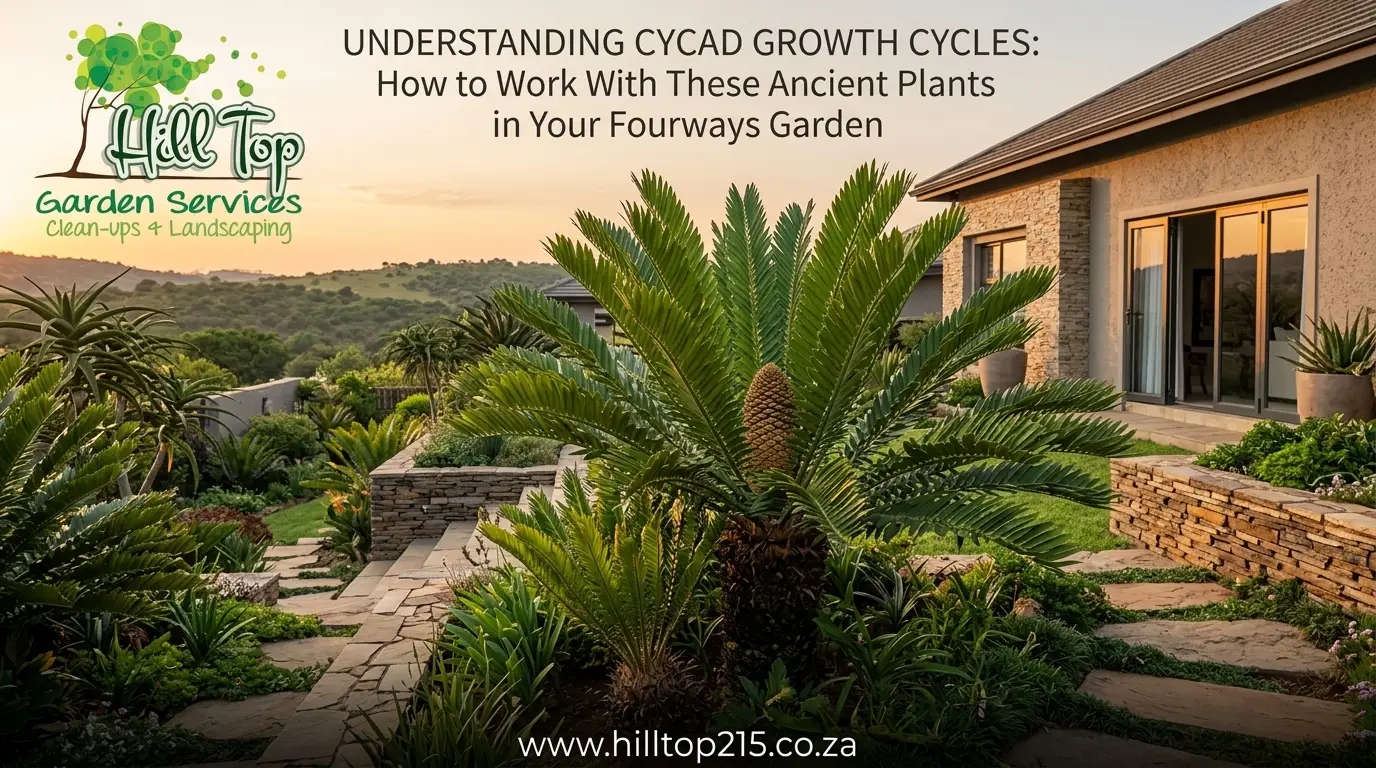
Understanding Cycad Growth Cycles: How to Work With These Ancient Plants in Your Fourways Garden
There’s a particular kind of excitement that comes with watching a cycad push out new leaves. One day the plant looks st…
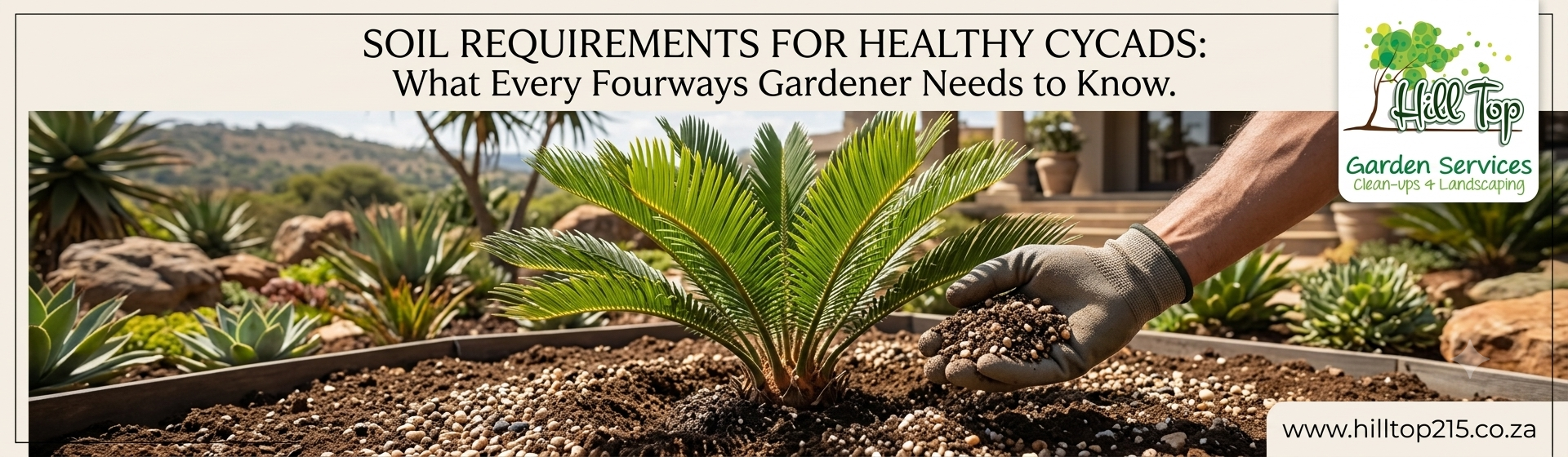
Soil Requirements for Healthy Cycads: What Every Fourways Gardener Needs to Know
I’ll never forget the look on a client’s face in Broadacres when I dug around one of his prized Encephalartos lehmannii.…