
Dry Patches and Wet Spots: Is Your Irrigation Covering the Garden Evenly?

FOURWAYS IRRIGATION · OBSERVE BEFORE YOU ADJUST
One corner of the lawn looks thirsty while the flower bed beside it stays damp. The obvious response is to run the irrigation for longer, but that can put even more water into the wet area without solving the dry patch.Uneven irrigation coverage is a distribution problem to investigate, not an automatic reason to increase watering time. A damaged head, an obstruction or an unsuitable layout might be involved. Equally, a struggling patch can have a cause unrelated to irrigation.
Before changing settings, take a careful look at what the system is doing. A few clear observations will make a conversation about Hilltop’s irrigation services more useful and help distinguish a maintenance issue from a garden condition that needs different advice.
The first rule
Compare where the water lands with where the problem appears. Do not use lawn colour alone to diagnose a sprinkler fault, and do not assume every bed and lawn area should receive the same amount of water.
Start with a simple map of the problem
Walk the garden before a normal irrigation cycle. Note the location of dry-looking grass, persistent wet ground, water on paving and any plants that appear stressed. Name each area clearly: “lawn beside driveway” is more useful than “left side” when someone else reviews the notes.
Record whether the pattern is recent or has developed gradually. Mention changes such as new planting, building work, a moved sprinkler, a controller adjustment or a hedge that has grown taller. These details give context without pretending to identify the cause.
Photographs should show the wider area as well as the affected patch. A close-up of grass does not reveal a nearby wall, a dense shrub or the position of the sprinkler that might explain the pattern.
Watch one normal cycle from a safe position
If you know how to operate your controller safely, observe the usual zones without changing their settings. Otherwise, ask the person responsible for the system to demonstrate it. Note which sprinklers run together and whether every visible head rises and sprays as expected.
Stay clear of equipment and avoid opening electrical components, valves or buried connections. For a communal system, report observations to the authorised contact rather than experimenting with shared settings.
The EPA’s WaterSense sprinkler check highlights damaged or clogged heads, leaks and water directed onto hard surfaces as useful inspection points. Treat this as an observation exercise; unfamiliar repairs are best assessed by someone with the right knowledge.
Clue 1: a head is hidden or its spray is blocked
Plants change size, mulch shifts and lawn edges grow. A sprinkler that once had a clear path may now spray into a shrub, the side of a pot or a dense clump of grass. Look at the spray from a couple of angles rather than judging it only from directly above.
Record what is obstructing the water and the area beyond it that appears to be missed. Avoid immediately cutting back a valued plant or moving the sprinkler: the appropriate solution may depend on the design of the whole zone.
This is where irrigation and landscaping decisions connect. A planting change can alter the way an established system works, so tell the assessor about recent garden improvements.
Clue 2: water reaches paving instead of planting
A visible arc across a path or driveway is worth recording, particularly when the nearby garden remains dry. Note whether the problem appears throughout the cycle or only when wind moves the spray. Conditions during one observation may not represent every day.
Take a photograph that includes the head, the hard surface and the intended watering area. This helps explain whether the concern is direction, placement, a damaged component or something requiring closer inspection.
Avoid solving overspray by simply shortening the entire programme. That may reduce water reaching the paving while also reducing water available to the rest of the zone.
Clue 3: one sprinkler behaves differently
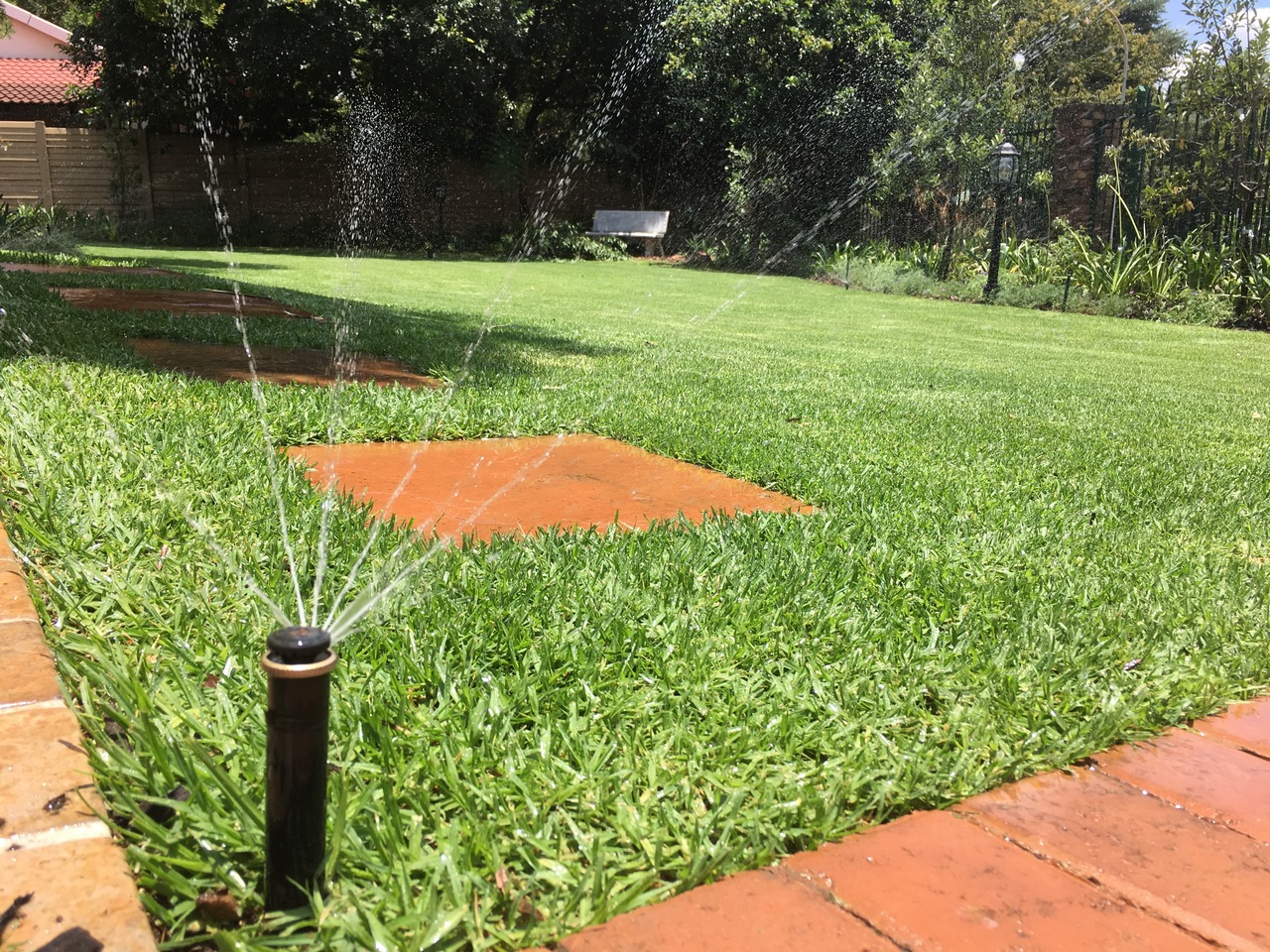
A head that barely rises, releases an unusual stream or sprays very differently from neighbouring heads deserves attention. So does a fitting surrounded by water bubbling from the ground. Describe what you see without deciding that a particular part must be replaced.If several heads in a zone appear weak together, note that pattern too. It gives the irrigation professional a different starting point from a problem affecting just one location. Pressure, layout and component compatibility require proper assessment.
For an active leak or rapidly collecting water, use the system’s normal shut-off only if you know how to do so safely, and arrange assistance. Do not leave an obvious problem running simply to finish an observation.
Clue 4: the wet and dry areas have different conditions
Shade, foot traffic, soil condition, slopes and drainage can create different outcomes even when sprinklers appear to work. A low area may collect water from elsewhere. A narrow strip beside paving may experience different conditions from an open lawn.
Look for these differences before concluding that more sprinkler time will fix the problem. Note whether the wet spot persists between watering cycles or after rain. A photograph and a brief history are more useful than repeatedly changing the timer and losing track of the original pattern.
Plant needs also vary. A mixed bed and a lawn may not be well served by identical watering assumptions. Discuss the planting and the irrigation together instead of treating the controller as the only adjustable part of the garden.
Why longer watering is often the wrong first experiment
A longer cycle increases runtime across the zone. It does not automatically correct where water lands. If one area is blocked while another already receives plenty, extending the cycle can exaggerate the difference.
Changing several settings at once also makes the next observation harder to interpret. Keep a record of the current programme and let the person assessing the system know what has been changed recently.
After a repair or agreed adjustment, review the same locations again. Compare the system’s behaviour first, then give the garden an appropriate period to respond. Damaged lawn or stressed plants will not necessarily change appearance immediately after coverage improves.
What to send when requesting an irrigation assessment
- Your Fourways location and the part of the garden affected.
- Photographs showing the problem in context.
- Which zone runs when the issue appears, if you know.
- Whether the problem occurs every cycle or only sometimes.
- Recent planting, building work or controller changes.
- Any visible leak, pooling, broken head or overspray.
Explain access arrangements and whether the controller or water supply is in a locked area. Ask what the assessment will cover, how proposed repairs will be quoted and whether any garden reinstatement would be separate.
Keep the garden and the system under review
Once the immediate issue is addressed, occasional observation helps catch new obstructions and visible damage. Include sprinkler clearance in conversations about residential garden maintenance, particularly after planting changes or work near irrigation lines.
The goal is a system that suits the garden’s current layout. A schedule inherited from a previous owner or a different planting scheme may need review, but adjustments should follow the conditions and any applicable local watering requirements.
Frequently asked questions
Does a brown patch always mean insufficient irrigation?
No. Wear, shade, soil issues and plant health problems can also affect appearance. Observe irrigation coverage and ask for advice before treating colour alone as proof of a watering fault.
Should I replace all the sprinkler heads?
Not without an assessment. A local obstruction or individual damaged component may require a different response from a layout problem. Ask what has been found and why a proposed change is appropriate.
Can I use the same settings all year?
A fixed programme may not suit changing conditions. Review it with someone who understands your garden and system, taking rainfall, plant needs and current watering rules into account. This guide deliberately avoids a universal runtime.
What is the most useful first step?
Record the affected locations and watch a normal cycle safely. Clear observations help the person assessing the system spend less time reconstructing what you have noticed and more time identifying the right next step.
Discuss uneven irrigation with Hilltop
Tell Hilltop where the dry patches, wet spots or overspray appear in your Fourways garden. Share a few photographs and what you noticed during a normal cycle so the team can discuss an assessment and the appropriate next steps.
Call 011 807 3773 or send an enquiry through Hilltop’s contact page.
Hilltop · Practical care for your home, workplace and outdoor spaces.
Explore Irrigation Services
More on Irrigation & Water

How to Irrigate Your Garden Using Greywater: Smart Water-Saving Tips for Fourways Homes
A few years ago, a client in Broadacres called me during one of those long dry spells we get in Fourways. Her water bill…

Seasonal Adjustments for Optimal Water Use in Irrigation: A Fourways Landscaper’s Practical Guide
Let me tell you a quick story from right here in Fourways. Last October, I got a call from a homeowner in Broadacres who…
Common Irrigation Problems and How to Solve Them: Real Talk from a Fourways Landscaper
If you live or own property in Fourways, you’ve probably experienced that sinking feeling when you walk outside after a …