
What Should a Corporate Garden Maintenance Contract Include?

FOURWAYS CORPORATE GARDENS · A PRACTICAL BUYER’S GUIDE
A neat office entrance does more than look good in a photograph. It helps visitors find their way, gives staff an outdoor space they can use and prevents neglected corners from becoming a recurring management problem. Yet a quote that simply says “garden maintenance” leaves plenty of room for different expectations.
A useful corporate garden maintenance contract should define the areas covered, the work included, visit frequency, quality expectations, waste handling, reporting and the process for approving extra work. For a business in Fourways, it should also fit the way the property operates: access controls, busy arrival times and shared spaces all affect the practical plan.
If you are comparing corporate garden services from Hilltop, use the questions below to prepare for a site discussion. They are points to agree with your provider, rather than a list of automatically included services.
Start with clarity, then compare prices
Two monthly quotes are only comparable when they cover the same areas, tasks and standard of care. Ask each provider to explain what happens during an ordinary visit and what requires separate approval.
1. A clear map of the areas being maintained
Walk the property with the person preparing the proposal. Include the entrance, lawns, planting beds, courtyard, boundary planting, parking islands and any outdoor staff areas that you want covered. A simple marked photograph or site plan can prevent later confusion about a strip of garden outside a fence or beside a shared driveway.
For a multi-tenant property, establish where the landlord’s responsibilities end and each tenant’s begin. If a body corporate or managing agent controls shared grounds, confirm who can approve changes. Hilltop’s body corporate services may be relevant when the site includes communal gardens and shared maintenance responsibilities.
2. A written task list with sensible boundaries
“Keep the garden tidy” is a starting point, not a complete brief. Discuss lawn care, edging, weed control, bed tidying, suitable shrub pruning and the handling of fallen leaves. Then identify the work that sits outside routine care, such as replacing plants, changing a bed layout, major tree work or repairing equipment.
Be specific about the result you expect. For example, an entrance bed may need to remain presentable throughout the week, while a quiet boundary area may have a different priority. Avoid requiring every task on every visit: good scheduling allows the provider to respond to actual growth and conditions while still meeting the agreed standard.
3. Visit frequency that matches the property
A small paved courtyard and a large office garden do not need identical schedules. Lawn area, planting density, leaf fall and the level of presentation expected all influence how often attention is needed. Ask how the proposed frequency was chosen and how seasonal work will be planned.
Discuss what happens if rain prevents a task, access is unavailable or a public holiday falls on the usual service day. The contract should make the communication and rescheduling process clear. A named contact and an agreed response process are more useful than assuming the team will simply arrive at another time.
4. A plan for access and minimal disruption
Garden work needs to coexist with deliveries, meetings and people moving around the building. Agree on arrival arrangements, parking, gate access and the person who signs the team in. Explain any sensitive areas or times when noise would be especially disruptive.
Ask how work beside walkways, vehicles and entrances will be managed. Any requirements for visitor registration, protective measures or equipment storage should be discussed before the first visit. Make sure responsibility for reporting an obstruction or damaged surface is understood, even if repairing it falls outside the garden contract.
5. Waste removal and the finish after each visit
Find out whether the proposal includes collecting and removing garden waste, using an agreed on-site composting area, or leaving material for another service to collect. The answer can affect both the quoted price and how tidy the site feels after the team leaves.
Also discuss the final tidy around paved edges and working areas. Specify where bags or cuttings may be placed temporarily and which routes must remain clear. If litter collection is part of the brief, distinguish it from garden waste and clarify the areas covered.
6. Water use, irrigation checks and repairs
Gardening and irrigation maintenance can overlap, but they should not be treated as interchangeable. Ask whether the routine team is expected to report visible leaks, obvious overspray or dry patches, and who decides whether an irrigation specialist is needed. Confirm whether any checks or repairs carry an additional charge.
For long-term planning, Rand Water’s Water Wise gardening guidance is a useful local resource. Grouping plants with similar water needs and considering water use during design can support a more manageable garden. Hilltop also has a dedicated irrigation service page if your site needs that discussion.
7. Reporting that helps you make decisions
A short, consistent update is often enough: work completed, issues noticed and decisions needed. Agree on the format and who receives it. Photographs can be useful for an off-site property manager, particularly when a damaged sprinkler or declining plant needs attention.
Separate observations from authorised work. If a bed would benefit from new planting, you should receive a clear recommendation and price before the change proceeds. Nominate one person who can approve extras so that a casual request from an employee does not become an unexpected invoice.
8. Pricing and review arrangements you can understand
Check whether the price is monthly or per visit, whether VAT applies and what consumables or materials are included. Ask how additional visits, disposal, replacement plants and other extras are priced. Read the payment terms, notice period and process for reviewing the scope.
A lower figure can be perfectly suitable for a simpler brief, but it should not win by hiding omissions. Compare the proposals line by line. If one includes waste removal and another does not, ask for clarification before deciding which offers better value for your property.
A practical checklist for the site meeting
- Which areas are included, and who controls the shared spaces?
- What does an ordinary visit cover, and which tasks are scheduled less often?
- How are access, noise-sensitive periods and weather interruptions handled?
- Who removes waste and reports garden or irrigation problems?
- Which materials and extras require a separate quote?
- Who approves changes, and when will the service be reviewed?
After the first few visits, walk the site against the agreed brief. Focus on observable results and recurring issues. This gives both parties a practical way to refine the arrangement before small misunderstandings become a monthly frustration.
Frequently asked questions
How often should an office garden be maintained?
There is no single frequency that suits every office. The site’s lawn, planting, use and presentation requirements should guide the recommendation. Ask for a schedule based on a walk-through rather than selecting a frequency from the property size alone.
Does garden maintenance include landscaping?
Routine maintenance and changes to the garden are different scopes of work. New beds, redesigned planting or changes to paths should be discussed separately. See Hilltop’s landscaping services if the existing layout needs improvement.
What should I send when requesting a quote?
Provide the Fourways property address, photographs, an outline of the areas to maintain, your current concerns and any access restrictions. Mention who manages the site and whether you need a routine service, an initial clean-up or both.
Discuss your corporate garden with Hilltop
Arrange a conversation about your Fourways premises, priorities and maintenance requirements. Confirm the proposed scope and visit schedule with the team.
Call 011 807 3773 or send an enquiry through Hilltop’s contact page.
Hilltop Garden Services – Keeping your outdoor spaces beautiful, efficient, and effortless all year round.
Corporate Garden ServicesMore on Body Corporates & Commercial

How to Plan Corporate Garden Maintenance Around a Busy Workplace
A well-kept office garden should work with the business day. Plan visit windows, pedestrian access and clear communicati…

A Communal Garden Checklist for Fourways Body Corporates
A practical monthly walkthrough for Fourways trustees and managing agents, covering shared paths, lawns, planting, irrig…
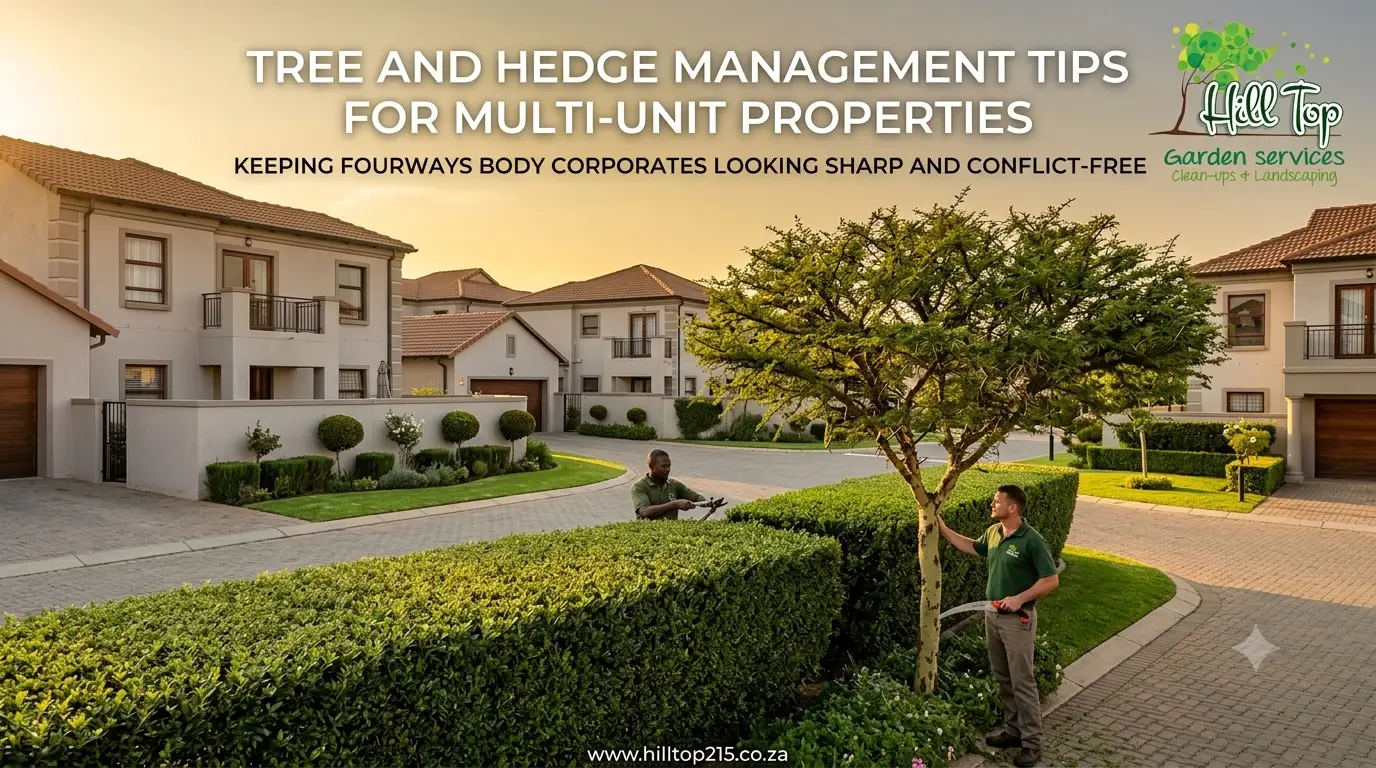
Tree and Hedge Management Tips for Multi-Unit Properties: Keeping Fourways Body Corporates Looking Sharp and Conflict-Free
If you’ve ever served on a body corporate in Fourways, you’ve probably seen it happen. One resident loves the big tree t…