
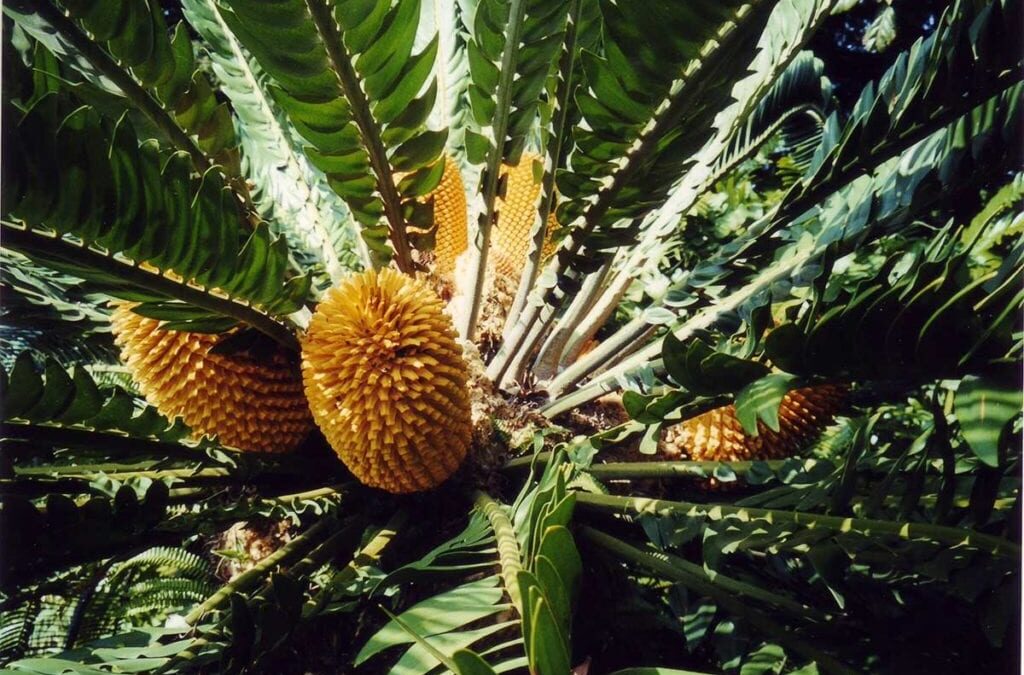
Cycads are living fossils, a testament to nature’s resilience and evolutionary brilliance. These ancient plants have survived mass extinctions, climate changes, and geological shifts for over 280 million years, predating even the dinosaurs. Today, cycads remain a prized feature in gardens worldwide, especially in South Africa, where they are an essential part of the country’s rich biodiversity.
At Hilltop Garden Services, we recognize the timeless beauty and ecological importance of cycads. In this post, we take you through their fascinating history, evolution, and modern significance, offering insights into why these prehistoric wonders are still thriving in contemporary landscapes.
1. The Ancient Origins of Cycads
Cycads first appeared in the late Carboniferous period, about 280 million years ago. This era, known for vast swamp forests and early plant evolution, saw the rise of primitive cycads that dominated the landscape.
By the Mesozoic era (about 252-66 million years ago)—the age of dinosaurs—cycads were among the most common plants on Earth. Their thick, leathery leaves and sturdy trunks allowed them to survive in varied climates, from tropical forests to arid deserts.
Fun Fact: Cycads coexisted with dinosaurs like the Brachiosaurus and Triceratops, serving as a primary food source for many herbivorous species!
However, as flowering plants (angiosperms) emerged and diversified, cycads lost their dominance. Despite this, they managed to survive multiple mass extinctions, including the catastrophic asteroid impact that wiped out the dinosaurs 66 million years ago.
2. The Evolution of Cycads: Nature’s Survivors
Unlike many ancient plant species that went extinct, cycads developed extraordinary survival adaptations:
🔹 Slow Growth: Cycads grow at an incredibly slow rate, sometimes taking decades to develop mature leaves and cones. This conserves energy and helps them endure harsh conditions.
🔹 Toxicity to Predators: Many cycads contain toxic compounds in their leaves and seeds, making them unpalatable to herbivores.
🔹 Symbiosis with Microbes: Cycads have a unique relationship with nitrogen-fixing bacteria, which helps them extract nutrients from nutrient-poor soils.
🔹 Efficient Water Storage: Their thick trunks store water, allowing them to survive in drought-prone regions.
These adaptations have ensured their survival across different climatic changes, from the age of dinosaurs to modern urban landscapes.
3. Cycads in South Africa: A National Treasure
South Africa is home to some of the most diverse and rare cycad species in the world. With over 38 indigenous species, the country is a global hotspot for cycad conservation.
🔹 Encephalartos Genus: South Africa’s Pride
The majority of South African cycads belong to the Encephalartos genus, which translates to “bread in the head.” This name comes from the starchy center of their stems, which indigenous communities historically used as a food source.
Some notable South African cycad species include:
🌱 Encephalartos altensteinii – One of the oldest cycads, with some specimens exceeding 1,000 years in age!
🌱 Encephalartos woodii – Considered the rarest cycad in the world, with only one known specimen ever discovered in the wild.
🌱 Encephalartos horridus – Known for its striking blue-gray leaves and unique appearance, making it a popular garden feature.
Cycads & Conservation Challenges
Unfortunately, cycads are among the most endangered plant groups due to habitat destruction and illegal poaching. Some species are so rare that they are worth millions of rands on the black market.
South Africa has strict conservation laws to protect cycads, and permits are required for buying, selling, or transporting these plants.
4. The Role of Cycads in Modern Landscaping
Despite their ancient origins, cycads remain highly sought after in modern garden design due to their timeless beauty, drought tolerance, and sculptural appearance.
Why Include Cycads in Your Garden?
✔ Low Maintenance: Cycads require minimal watering and thrive in dry, sandy soils—ideal for South Africa’s climate.
✔ Striking Aesthetics: Their bold, symmetrical foliage and dramatic trunks create a statement piece in any garden.
✔ Longevity: A well-cared-for cycad can live for centuries, making it a legacy plant for future generations.
✔ Versatile Planting: They pair beautifully with succulents, aloes, and rocks, adding a prehistoric charm to landscapes.
Whether you’re creating a tropical paradise, a xeriscape garden, or a minimalist modern design, cycads add a timeless elegance to any outdoor space.
5. How Hilltop Garden Services Can Help You Grow & Care for Cycads
At Hilltop Garden Services, we specialize in cycad planting, maintenance, and care to ensure these ancient wonders thrive in your garden.
🌿 Expert Cycad Selection – We help you choose the best species suited to your garden conditions.
🌿 Soil & Water Management – Our team provides custom soil mixes and irrigation solutions for optimal cycad growth.
🌿 Cycad Health & Pest Control – We offer specialized care to prevent fungal infections, scale insects, and nutrient deficiencies.
🌿 Legal Guidance on Cycad Conservation – Need help with permits? We ensure that your cycad purchase complies with South African conservation laws.
Final Thoughts: A Living Link to Prehistoric Times
Cycads are more than just ornamental plants—they are a living link to Earth’s distant past, offering a glimpse into the prehistoric world. By incorporating cycads into modern landscapes, we not only preserve their legacy but also create stunning, low-maintenance gardens that thrive for generations.
Whether you’re a passionate plant collector, a landscape enthusiast, or simply someone who appreciates nature’s beauty, cycads are a must-have for any South African garden.
🔹 Looking to add cycads to your landscape?
For more information, visit our website Hilltop Garden Services or call us at (011 807 3773)
Follow us on social media for the latest updates and inspiration for your outdoor space.
Recent Comments