
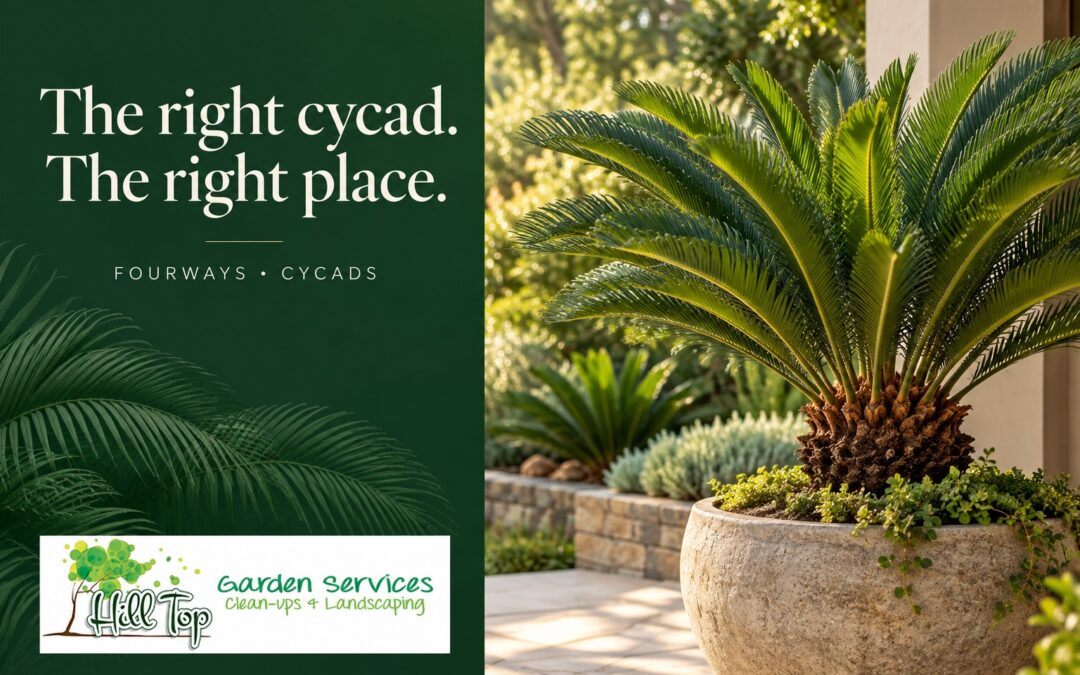
FOURWAYS CYCADS · CHOOSE THE PLACE BEFORE THE PLANT
A cycad can give an entrance, courtyard or garden bed a strong focal point. Its appeal is easy to understand: a sculptural form, distinctive foliage and a presence that can hold its own without a crowded planting scheme.
Choosing between a pot and a garden bed, however, is more than a styling decision. The right position depends on the identified species, the individual plant’s size, growing conditions and the space available as it develops. There is no single rule that makes every cycad suitable for the same sunny corner or decorative container.
If you are considering cycads from Hilltop for a Fourways property, start with the location you have in mind. A few photographs and practical questions will help make the discussion more useful than choosing a plant on appearance alone.
A useful starting point
A container can work well where placement and presentation matter, provided the plant and pot are suitable. A garden bed can offer a more permanent setting, provided the soil, drainage, light and mature clearances are right. Neither option removes the need for species-specific advice.
Identify the cycad before deciding where it belongs
Ask for the botanical name and advice for that plant. “Cycad” describes a group, not one interchangeable garden product. Different plants can have different requirements and mature forms, and a young specimen may look manageable in a position that will later become crowded.
Ask how large the fronds may become, how the plant has been grown and what conditions it is accustomed to. Moving a plant abruptly into a very different exposure can be a separate concern from whether the species eventually suits that location.
Keep the name and any care information with your purchase records. Accurate identification makes future questions about placement, repotting or plant health easier to answer.
When a container is worth considering
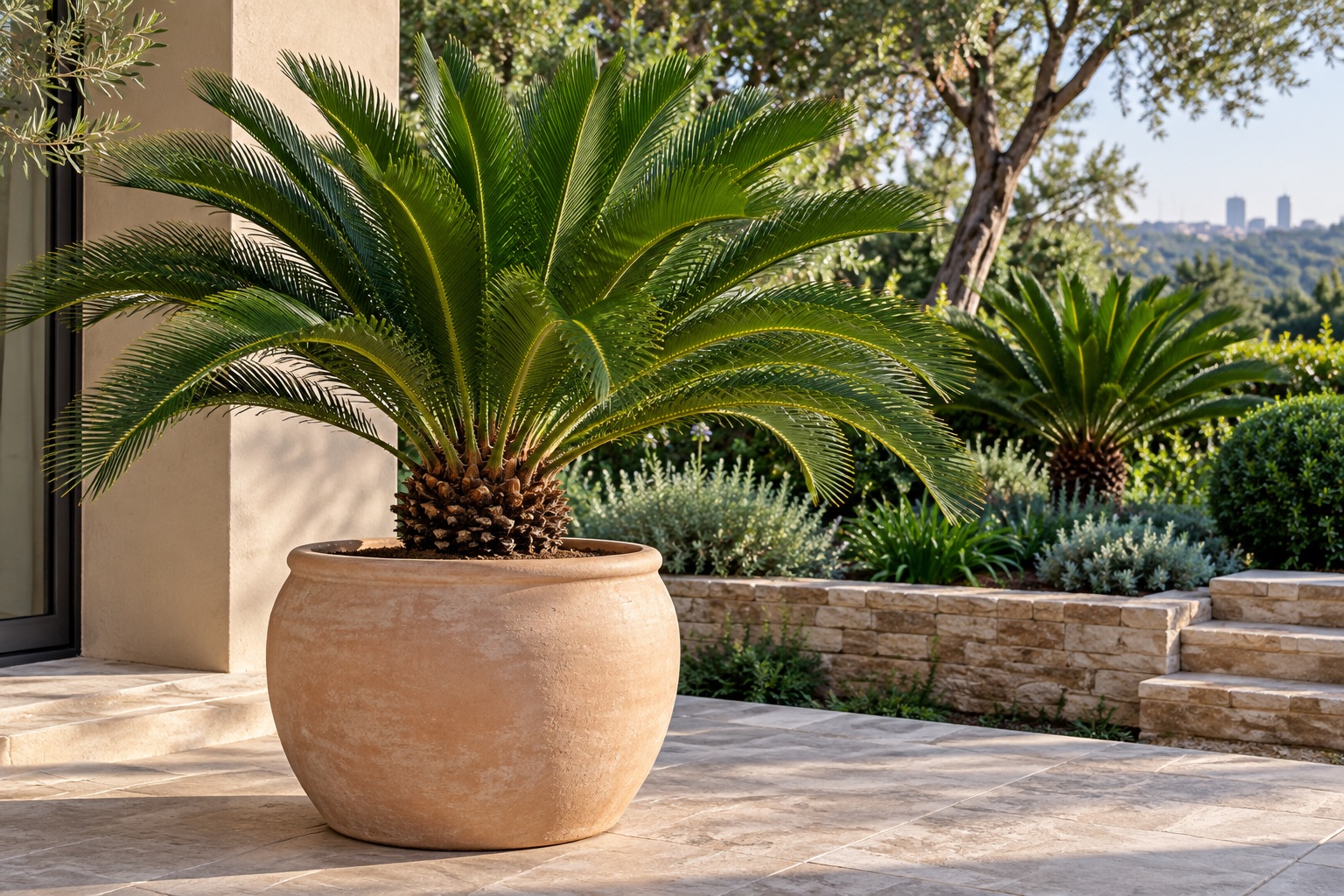
A pot can create a deliberate focal point near an entrance or in a courtyard where there is no suitable planting bed. It can also help define a space without committing immediately to a permanent in-ground position.
That flexibility has limits. A planted container may be very heavy, and a mature plant is not something to move casually whenever the weather changes. Consider how the pot will be delivered, placed and accessed for future care.
Choose the container with the plant’s needs in mind. Discuss its dimensions, stability, drainage openings and a suitable growing medium. An attractive outer vessel without a workable drainage arrangement should not be treated as ready for planting.
The RHS guide to planting containers provides a useful general reminder about drainage and selecting an appropriate compost. For a cycad, obtain advice specific to the identified plant rather than assuming any standard potting mix or watering routine will suit.
When a garden bed may be the better setting
A well-chosen bed can integrate the cycad into the wider garden and give its form room to be seen. It may suit a long-term focal point where future access, mature spread and the surrounding planting have all been considered.
Assess the actual conditions before digging. Look at what happens after rain or irrigation, whether water collects in the area and how neighbouring plants are watered. A bed that stays persistently wet needs assessment rather than a decorative fix at the surface.
Consider what is below and around the proposed position, including services, edging and nearby structures. Planting or relocating a substantial specimen should be planned with suitable assistance. Avoid treating a mature plant as a straightforward weekend move.
Compare the options using five practical questions
1. Is the light suitable for this plant?
Observe the position at different times of day. A courtyard described as sunny may receive only a short period of direct light, while a spot beside reflective paving may experience a very different exposure. Give the supplier that context and ask how to introduce the plant to its new position.
2. Where will excess water go?
For a pot, think about the drainage route beneath it and whether a saucer or outer container could retain water. For a bed, consider the site’s drainage and any runoff from neighbouring surfaces. Ask for advice if you are unsure rather than relying on a universal watering schedule.
3. Is there space for the fronds?
Allow for the plant’s eventual spread, not just its current outline. Keep entrances, walkways, seating and routine access in mind. A striking display loses its appeal if people have to brush past stiff foliage every time they use the path.
4. Can the plant be maintained in that position?
Think about access for inspection, cleaning around the container and any future repotting or specialist work. A plant placed tightly between a wall and a heavy pot may be difficult to reach later. Good landscape planning includes those ordinary maintenance needs.
5. Is the location suitable for the household?
Plant choice must take children and pets into account. The ASPCA identifies the sago palm, Cycas revoluta, as toxic to pets. Do not assume a cycad is pet-safe because it is sold as an ornamental plant or positioned in a pot.
If pets may chew plants or reach fallen material, discuss a safer alternative rather than relying on height alone. Keep children from handling or eating plant material. If ingestion is suspected, seek prompt advice from a veterinarian for an animal or an appropriate medical service for a person.
Check provenance and paperwork before purchase or relocation
Ask the seller to identify the plant clearly and explain the documentation that accompanies it. Requirements can depend on the species and the proposed activity, so do not assume that buying, transporting or relocating every cycad follows one simple rule.
Confirm any applicable requirements with the relevant provincial conservation authority before proceeding. SANBI’s frequently asked questions provide a starting point for conservation-related enquiries and direct permit questions to the appropriate authorities.
Keep the invoice, plant identification and any required documents together. If you already own a plant and want to move it, establish what is needed before arranging the physical relocation.
Make the surrounding design work harder
A cycad often benefits visually from enough space around its outline. Before adding more plants, look at the view from the entrance, living area or path where the feature will be seen most often. The best position may be slightly away from the centre of the available space.
Choose nearby planting that suits the location and can be maintained without conflicting watering assumptions. If the area uses an automatic system, discuss its coverage alongside the planting plan; Hilltop’s irrigation services may be relevant to that conversation.
For a container, a restrained colour and proportion can let the plant remain the focus. The pot should also be practical for the site, with a stable position and a clear drainage plan. Appearance and growing conditions need to work together.
What to send Hilltop before choosing a cycad
- A wide photograph of the proposed position.
- Your preference for a pot or a garden bed.
- The approximate space available around the plant.
- What you have observed about sun, shade and water collecting there.
- Nearby paths, entrances, children’s play areas or pet access.
- Whether you are buying a new plant or discussing an existing one.
Ask what site preparation and planting assistance are available, which items are included in the quotation and what aftercare information will be provided. Hilltop’s website lists cycads for sale and planting; confirm the details for your chosen specimen and property.
Frequently asked questions
Can a cycad stay in a pot permanently?
That depends on the plant, the container and its ongoing care. Ask about suitable pot size, future repotting and mature growth before assuming a decorative container will remain appropriate indefinitely.
Should all cycads be planted in full sun?
No single placement rule should be applied to every cycad. Identify the plant and get advice on its light requirements, previous growing conditions and introduction to the new position.
How often should I water?
There is no useful universal interval for every species, container and garden. Ask for guidance based on the plant, growing medium, drainage and local conditions, then observe the plant and soil rather than watering by habit alone.
Can I move a cycad I already own?
Discuss identification, condition, size, required paperwork and the proposed new location first. Larger specimens and uncertain growing conditions merit professional assessment before any digging or lifting begins.
Recent Comments