
Narrow Side Garden Ideas: Make an Awkward Space Work Harder
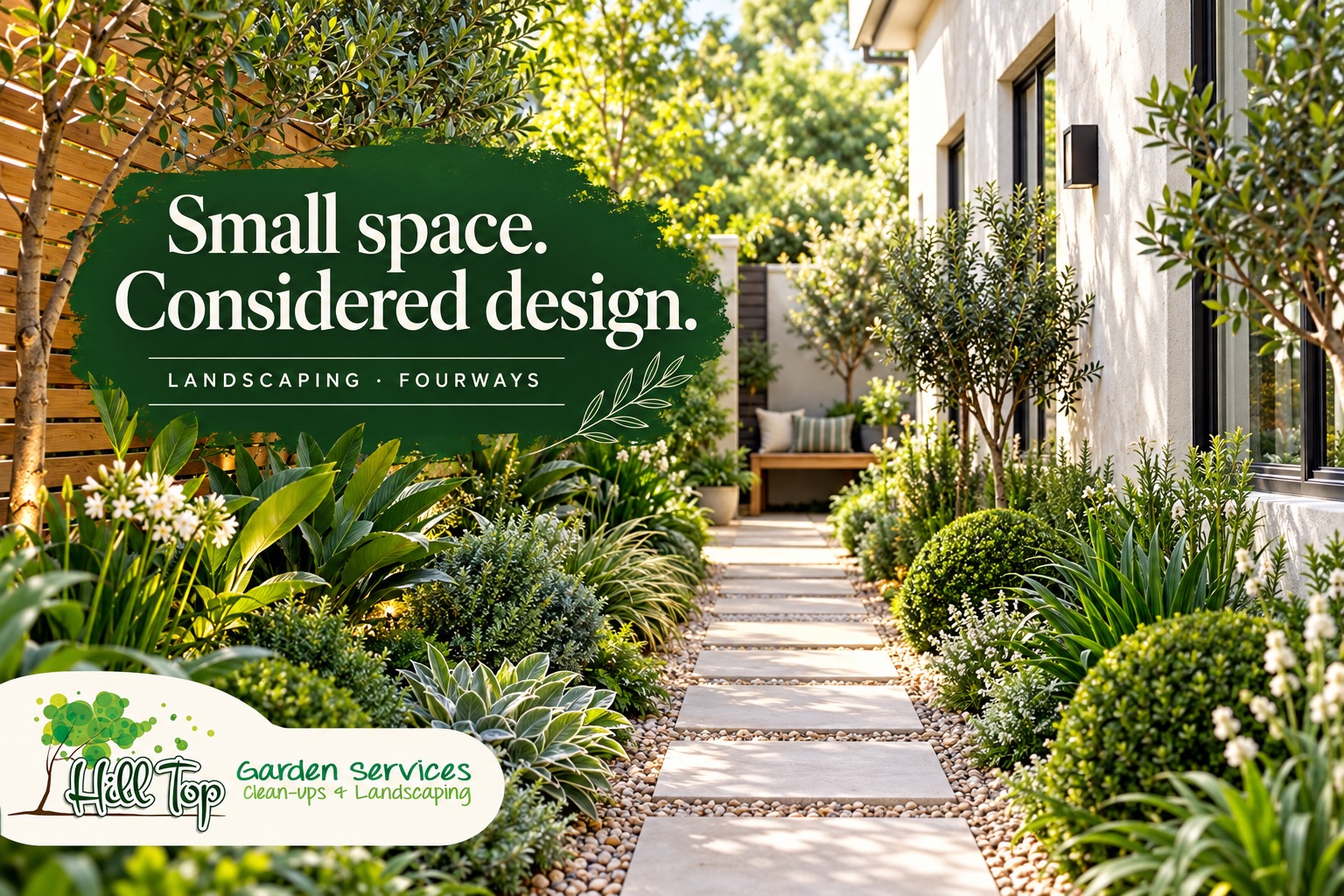
FOURWAYS LANDSCAPING · GIVE THE OVERLOOKED SPACE A PURPOSE
The narrow strip beside a house often becomes a place for spare pots, a hose and the things that have not found a permanent home. It may be too small for the garden you imagined, but too visible to ignore.
A useful side garden starts with one clear purpose and a route that works. Once those are settled, planting and materials can give the space character without making it harder to use.
For Fourways homeowners considering landscaping with Hilltop, the most productive starting point is a realistic brief. Describe what the area must do, what currently gets in the way and which practical features need to remain accessible.
Choose the job before the finish
Will this be a passage, a planted view from a window, a place to pause or a combination? A narrow space rarely benefits from trying to fit every garden idea into the same strip.
Begin with the route you already need
Walk from one end to the other carrying something you would normally take through: a garden bag, shopping or a folded chair. Notice the points where you turn sideways, step around a pot or brush against planting.
Think about doors opening into the area, gates, bins and equipment that must pass through. A route that feels generous when empty can become awkward once planting grows or a household task needs doing.
Identify any access requirements before selecting pavers or plants. Tell the designer about mobility needs, children and pets. Dimensions and surface choices should follow the people using the space, not simply the proportions of an inspiration photograph.
Measure the usable space
Record the width at several points and mark projections such as steps, drain covers, taps and door swings. Narrow strips are not always parallel, and the tightest point may determine what is practical.
The RHS guide to creating a garden plan explains why mapping dimensions and fixed features helps before design decisions. For a side garden, a simple measured sketch is more informative than a photograph alone.
Include the places you look from. A bedroom window may frame the middle of the strip, while the view from the gate runs along its length. Knowing which view matters most helps establish where the main feature belongs.
Look at light and water before choosing plants
Observe the space at different times. A gap between walls can have a bright end and a shaded middle. Reflections, roof overhangs and surrounding trees may change conditions within a very short distance.
After rain or ordinary watering, notice where water collects and where the ground stays wet. Report persistent pooling or water near structures for appropriate assessment. A decorative surface should not be used to conceal an unresolved drainage concern.
Ask for plants suited to the actual position and their mature dimensions. A small plant in a nursery pot can become a large obstruction. The best choice is one that can develop without constant cutting just to keep the route open.
Give the path a calm, deliberate line
A simple route often works well where space is limited. Its material, joints and edges should suit ordinary movement, maintenance and the conditions on site. Ask how the proposed surface will behave when wet and how it will be kept clean.
Stepping stones may look appealing, but consider the gaps and who will use them. A frequently used service route may need a different treatment from a lightly used garden feature. Discuss the practical trade-offs before committing to the look.
Keep levels, thresholds and drainage in the design conversation. These are site questions requiring appropriate assessment, especially beside a building. Do not assume that adding gravel or pavers is only a decorative exercise.
Plant selectively rather than filling every edge
A planted band on one side can preserve a clear route while softening a boundary. In a slightly wider area, a small grouping may work better than equal strips on both sides. The arrangement should respond to the space, not a fixed formula.
Use repetition to make the planting feel intentional. Too many unrelated specimens can make a narrow strip visually busy and create several different care needs. Ask how the chosen plants relate in size, light and watering requirements.
Consider what happens at eye level as well as near the ground. Screening may be useful in one position but block light or access in another. Any climbing plant or support needs a suitable location and a plan for its upkeep.
Keep taps, covers and service access usable
Show the designer the practical features that are easy to overlook in a photograph. Taps, drainage points and service covers should not disappear beneath pots or permanent planting.
Discuss access for future maintenance before placing a heavy container or fixed bench. A feature that is beautiful on installation day becomes frustrating if it must be dismantled whenever someone needs to reach a fitting.
If watering changes are needed, discuss irrigation installation or repairs as part of the project scope. A narrow bed beside paving needs careful coverage planning; additional runtime is not a substitute for a suitable arrangement.
Choose one focal point that earns its space
A wider end pocket might accommodate a seat, a carefully chosen pot or a simple planted feature. Start with the view you want to improve and test the position before buying a large object.
A bench only makes sense if someone can sit comfortably and move past it when necessary. A container should have a stable position and a workable drainage arrangement. Leave enough room for the plant, not just the pot.
Restraint can make the space feel more considered. One strong feature and a clear route often create a more settled result than several items competing for a limited area.
Decide how much maintenance the space should need
Think about access for weeding, pruning, sweeping and removing fallen leaves. A narrow strip beneath trees may need regular attention even if the planting itself is simple. Materials that trap debris can change that workload.
Ask how plant growth will be managed and whether the proposed layout fits your normal garden routine. If a team maintains the rest of the property, include this area in the conversation about residential garden care.
A lower-maintenance brief should describe the tasks you want to reduce. “Less time sweeping leaves from gravel” is more useful than asking for a garden that needs no attention.
Build a clear project brief and quotation
- Show the whole strip and the views from adjoining rooms.
- Provide measurements, doors, gates and fixed access points.
- Describe the main purpose and everyday route.
- Record sun, shade and any water concerns.
- Explain preferred materials and maintenance expectations.
- Ask which preparation, removal, planting and reinstatement are included.
Separate essential work from optional additions. A functional route and resolved site conditions may matter more than decorative extras. Hilltop’s landscaping budget guide can help structure that quotation conversation without assuming a standard price.
Frequently asked questions
Can a very narrow side garden still have planting?
Possibly, but the usable route comes first. Suitability depends on the dimensions, conditions and mature plant size. Ask for an assessment before treating every gap as planting space.
Will gravel make it easier to maintain?
It depends on the site and use. Leaves, soil movement and weeds can still need attention. Ask how the proposed finish will be contained, cleaned and maintained.
Should I remove everything and start again?
Not automatically. Identify useful existing plants, sound surfaces and access features first. A focused change may solve the problem without replacing the whole area.
Can the project happen in stages?
Discuss a sensible sequence with Hilltop. Preparation and essential access may need to precede planting or decorative features. Confirm how staged work affects labour, materials and the quotation.
Make your side garden useful again
Share photographs and rough measurements of your Fourways side garden with Hilltop. Explain how you need to use it and discuss a practical landscaping proposal for the space.
Call 011 807 3773 or send an enquiry through Hilltop’s contact page.
Hilltop · Practical care for your home, workplace and outdoor spaces.
More on Landscaping & Design

Landscaping Costs in Fourways: What Determines Your Project Budget?
Understand what shapes a landscaping quote in Fourways, from preparation and access to materials, plant sizes and afterc…
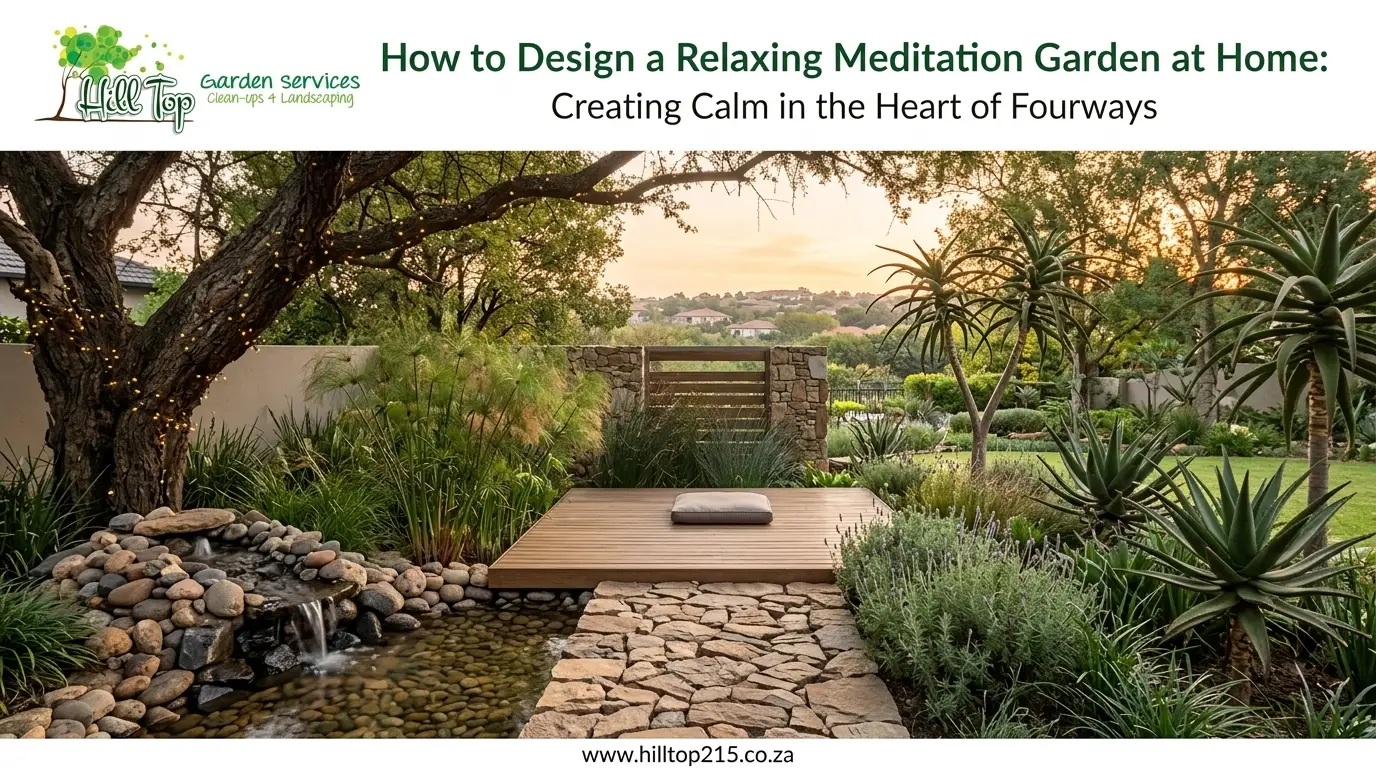
How to Design a Relaxing Meditation Garden at Home: Creating Calm in the Heart of Fourways
There’s a quiet corner in a garden in Broadacres that I still think about. It wasn’t large — just a small, sheltered spa…
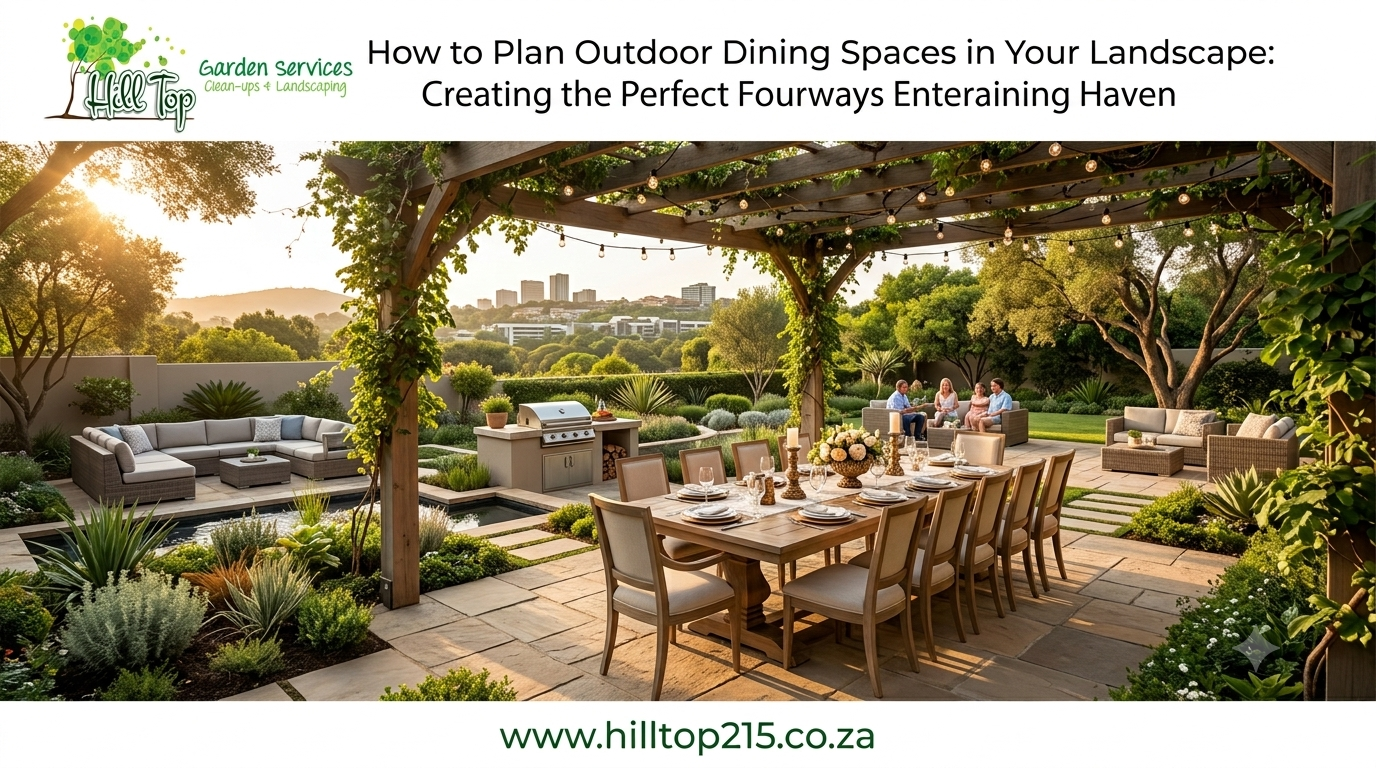
How to Plan Outdoor Dining Spaces in Your Landscape: Creating the Perfect Fourways Entertaining Haven
There’s something special about eating outdoors in Fourways. Whether it’s a Sunday braai with the family, Friday sundown…