

Sustainability is not just a buzzword; it’s a way of life, especially in a country like South Africa where water conservation and eco-friendly practices are essential. A sustainable garden design ensures that your outdoor spaces thrive while minimizing environmental impact. At Hilltop Garden Services, we specialize in creating gardens that are as beautiful as they are sustainable.
In this blog, we’ll explore the best practices for sustainable garden design in South Africa, offering tips that not only help protect the planet but also enhance the beauty and functionality of your garden.
Why Choose Sustainable Garden Design?
Sustainable gardens are about working with nature, not against it. Here are the key benefits:
- Water Conservation: South Africa’s frequent droughts demand innovative ways to use water wisely.
- Cost-Effective: Reducing water and maintenance needs lowers long-term costs.
- Healthier Ecosystem: Sustainable practices support local wildlife, improve soil health, and reduce pollution.
- Resilience: A well-designed sustainable garden can withstand extreme weather conditions.
1. Plan with Purpose
The foundation of a sustainable garden lies in thoughtful planning:
- Site Analysis: Evaluate your garden’s soil type, sunlight exposure, and natural water flow.
- Zoning: Group plants with similar water and sunlight needs to reduce wastage and improve efficiency.
- Reuse and Recycle: Incorporate materials like stones, bricks, and timber from previous landscaping projects.
2. Choose Indigenous and Drought-Tolerant Plants
South Africa boasts a rich diversity of native flora, which is perfectly adapted to the local climate:
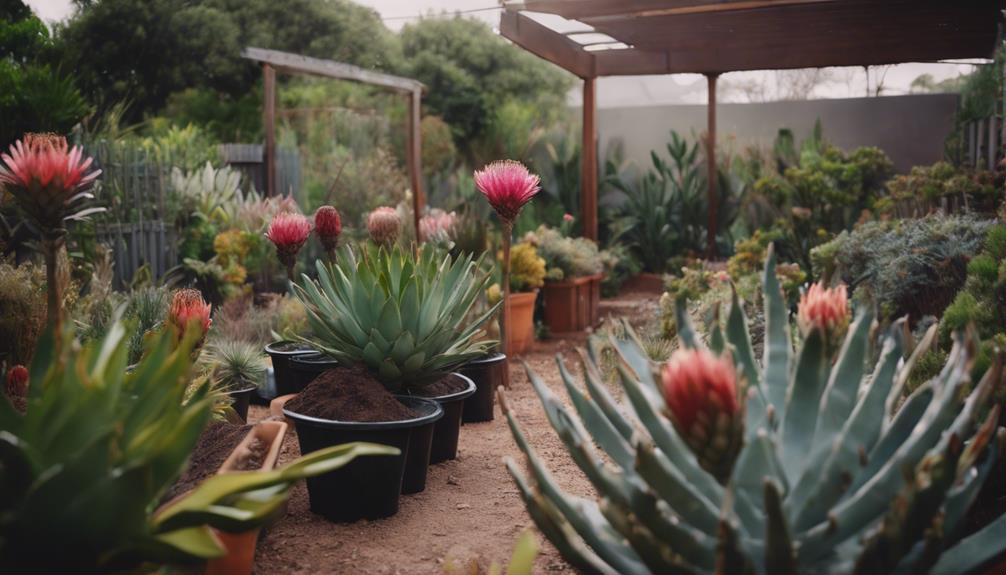
- Fynbos and Succulents: These require minimal water and thrive in dry conditions.
- Indigenous Trees: Trees like the wild olive or yellowwood provide shade, reduce soil erosion, and support wildlife.
- Low-Maintenance Ground Covers: Consider hardy ground covers like gazania or carpobrotus to reduce watering needs.
Using indigenous plants not only saves water but also supports local ecosystems.
3. Embrace Water-Wise Solutions
Water is a precious resource, and conserving it should be a top priority:
- Rainwater Harvesting: Install tanks to collect rainwater for irrigation.
- Drip Irrigation Systems: These deliver water directly to plant roots, minimizing evaporation.
- Greywater Recycling: Use water from baths, sinks, and washing machines (treated appropriately) to nourish your garden.
- Mulching: Apply organic mulch around plants to retain soil moisture and regulate temperature.
4. Improve Soil Health Naturally
Healthy soil is the cornerstone of any sustainable garden:
- Composting: Turn kitchen scraps and garden waste into nutrient-rich compost.
- Organic Fertilizers: Avoid synthetic fertilizers, which can harm the environment, and opt for organic options.
- Soil Testing: Regularly test your soil to determine its nutrient needs and maintain balance.
5. Incorporate Eco-Friendly Features
Sustainability isn’t just about plants; it extends to garden features as well:
- Permeable Paving: Use gravel, permeable bricks, or grass pavers to allow rainwater to seep into the ground, replenishing groundwater.
- Natural Pools: Replace chemically treated swimming pools with natural ones that use plants and filters to clean the water.
- Solar Lighting: Opt for solar-powered garden lights to reduce electricity use.
6. Create Wildlife-Friendly Spaces
A sustainable garden should also be a sanctuary for local wildlife:
- Bird Feeders and Baths: Attract native birds to your garden.
- Pollinator Plants: Include flowering plants like aloes or lavender to support bees and butterflies.
- Natural Habitats: Leave some areas wild or include features like rock piles and logs for small creatures.
7. Practice Regular, Eco-Friendly Maintenance
Keeping your garden sustainable means adopting environmentally friendly maintenance practices:
- Hand Weeding: Reduce reliance on herbicides by pulling weeds manually.
- Prune Smartly: Regular pruning promotes healthy growth and reduces disease.
- Minimize Lawn Areas: Lawns require significant water and maintenance; replace some areas with drought-tolerant ground covers.
Hilltop Garden Services: Your Partner in Sustainability
At Hilltop Garden Services, we believe in creating gardens that are both stunning and sustainable. Our team of experts offers:
- Customized garden designs tailored to your space and needs.
- Indigenous plant recommendations to suit South Africa’s climate.
- Water-saving solutions, including rainwater harvesting systems.
- Eco-friendly maintenance plans to keep your garden thriving.
Take the First Step Toward a Sustainable Garden
Designing a sustainable garden isn’t just about saving resources—it’s about creating a space that flourishes naturally and contributes to a healthier planet. Whether you’re starting from scratch or enhancing an existing garden, Hilltop Garden Services is here to guide you every step of the way.
For more information, visit our website Hilltop Garden Services or call us at (011 807 3773)
Follow us on social media for the latest updates and inspiration for your outdoor space.
Recent Comments